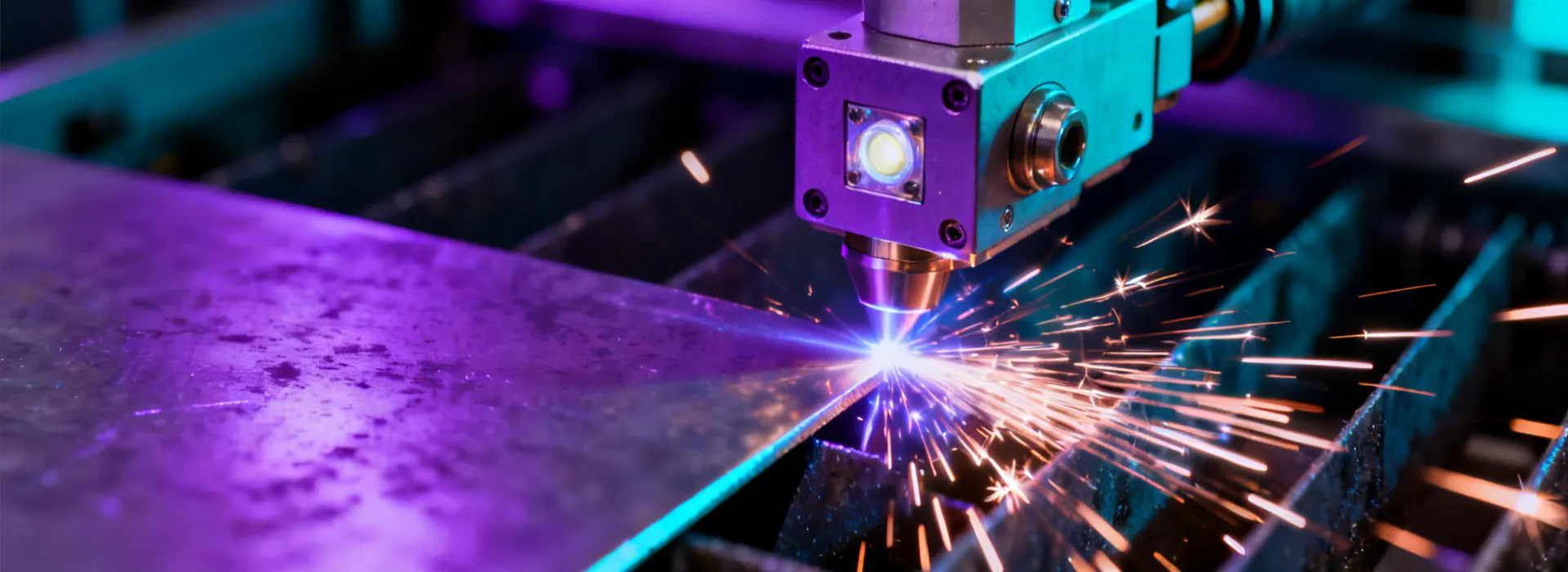
Innovation Lab
The Technology Behind Creality Laser
From advanced diode laser modules to AI-powered software, explore the engineering that makes Creality systems the choice of millions of creators worldwide.
From advanced diode laser modules to AI-powered software, explore the engineering that makes Creality systems the choice of millions of creators worldwide.
Creality's laser modules are engineered from the ground up for precision, longevity, and user safety.
Our optical system compresses the laser beam to a focal spot of just 0.06mm x 0.08mm, achieving line widths as fine as 0.01mm. This is accomplished through a proprietary lens assembly with multi-element aspherical optics that minimizes chromatic aberration inherent in diode lasers. The result: engraving detail that rivals machines costing 5x more.
Creality offers laser modules from 5W to 40W optical output. The higher-power modules use multi-diode beam combining technology — multiple laser diodes are precisely aligned and optically combined into a single coherent beam. This approach achieves industrial cutting power while maintaining the compact form factor and low cost that define desktop laser systems. Note: optical power differs from electrical power ratings used by some competitors.
The Falcon series uses a belt-driven gantry system with precision-ground aluminum linear rails. Stepper motors with 1/32 microstepping provide positioning accuracy of +/-0.01mm. Belt tension is factory-calibrated and user-adjustable for maintaining accuracy over the machine's lifespan. Belt-driven systems trade some absolute rigidity compared to ball-screw systems, but offer significantly higher speed for engraving applications.
Every Creality laser includes a flame detection sensor that triggers automatic shutdown, a physical emergency stop button, and an interlock system on enclosed models. The Falcon Pro integrates a steel-reinforced enclosure with a smoke-filtered viewing window and active air filtration. Laser-safe eyewear is included with all open-frame models. Class 1 safety rating is achieved with the enclosed configuration.
Powerful software that makes complex laser operations accessible to everyone, from first-time users to production professionals.
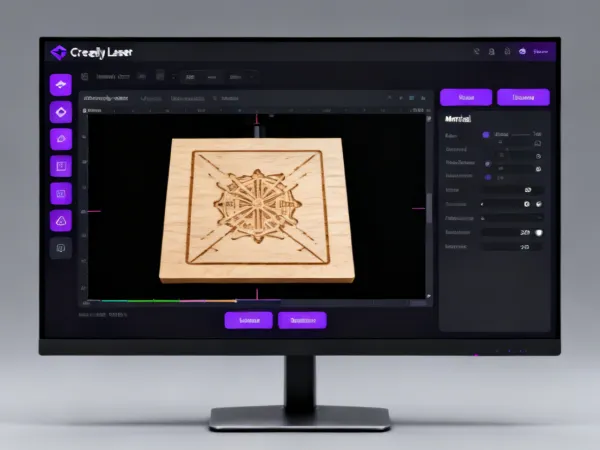
Our proprietary software eliminates the parameter guesswork that frustrates new laser users. Creality Print includes a tested material database with optimized settings for hundreds of material and thickness combinations. Import your design, select your material, and the software configures power, speed, and pass count automatically.
See exactly where your design will engrave before the laser fires. Align with real-time camera overlay for precise positioning on odd-shaped materials.
Database of 200+ tested material presets. Select your material and thickness, software handles the rest. Community-contributed presets expand the library continuously.
Import SVG, PNG, JPG, BMP, DXF, and AI files. Integrated image tracing converts photos to engravable vectors. Also compatible with LightBurn and LaserGRBL.
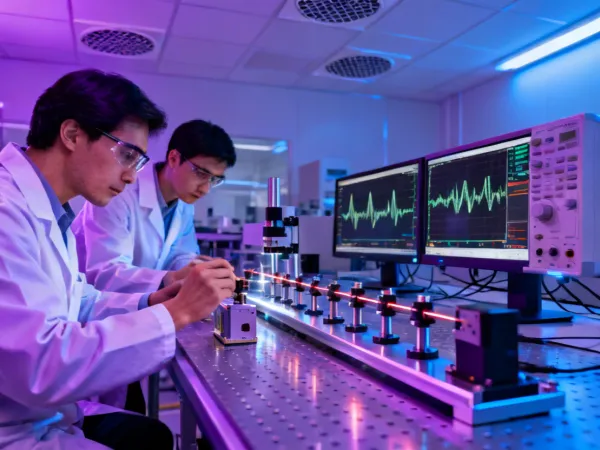
Creality maintains one of the largest R&D teams in the desktop digital fabrication industry. With 500+ engineers spanning optical design, firmware development, motion control, and software engineering, the in-house capability allows rapid iteration from concept to tested prototype in as little as 6 weeks.
Product evolution timeline: The original Falcon (2022) shipped with a 10W diode module and basic gantry. The Falcon 2 (launched Q2 2023) introduced compressed spot optics (0.06x0.08mm), integrated air-assist, and redesigned aluminum rail system. The Falcon 2 22W (Q3 2023) added beam-combining for higher cutting power. The Falcon 2 40W (Q1 2024) pushed optical output further using quad-diode combining. The Falcon Pro (Q3 2024) integrated a full enclosure with HEPA filtration and achieved Class 1 laser safety rating for educational and commercial indoor use.
Key patented technologies include the proprietary beam-combining system that achieves 40W optical output from a module weighing under 400g, the firmware air-assist control that automatically adjusts airflow rate between 10-30 L/min based on detected material type, and the camera-based alignment system with +/-0.5mm positioning accuracy on the preview overlay.
Limitation to note: while diode lasers excel at engraving and cutting non-metals plus surface marking on certain metals, they are not a replacement for CO2 lasers on transparent materials (clear acrylic, glass cutting) or fiber lasers for deep metal engraving and cutting. Diode laser modules also degrade over time; expect approximately 10-15% power reduction after 5,000 hours of use, though this varies with operating conditions and thermal management.
Different laser types serve different applications. This comparison uses measured specifications to help you determine which technology fits your material mix and production needs.
| Specification | Diode Laser (Creality Falcon) | CO2 Laser (Desktop Class) | Fiber Laser (Marking Class) |
|---|---|---|---|
| Wavelength | 445nm (visible blue) | 10,600nm (far infrared) | 1,064nm (near infrared) |
| Typical Power Range | 5W - 40W optical | 40W - 150W | 20W - 100W |
| Wood Cutting (max) | Up to 18mm (multi-pass, 40W) | Up to 25mm+ (single pass, 100W) | Not suitable |
| Acrylic Cutting | Colored/opaque only, up to 10mm | Clear and colored, up to 20mm+ | Not suitable |
| Metal Processing | Surface marking only (anodized, painted) | Limited marking with special coatings | Deep engraving, cutting thin sheets |
| Leather Processing | Engraving and cutting, sealed edges | Engraving and cutting, may cause yellowing | Not recommended |
| Engraving Speed | Up to 25,000mm/min | Up to 60,000mm/min (galvo) | Up to 7,000mm/min (galvo) |
| Laser Source Lifespan | 10,000-20,000 hours (diode) | 2,000-8,000 hours (glass tube) | 100,000+ hours |
| Typical Price Range | $200 - $1,500 | $2,000 - $15,000 | $3,000 - $30,000 |
| Best For | Wood, leather, fabric, colored acrylic | Clear acrylic, rubber, large-format work | Metal marking, jewelry, serialization |
Specifications represent typical ranges across popular desktop-class machines. CO2 galvo speed refers to marking systems; flatbed CO2 cutting speed is typically 1,000-6,000mm/min. All prices are approximate retail and vary by region. Contact our team for specific comparisons.
Every Creality laser system undergoes rigorous testing before shipping.
Each unit completes a multi-stage quality check at our Shenzhen facility:
Not sure if a Creality laser will work for your application? We offer free material testing:
A glimpse at what we are working on to push laser technology forward.
Combining IR, visible, and UV laser sources in a single platform to process any material without module swaps. Early prototypes show promising results for combined wood cutting and metal marking in a single workflow.
Machine-learning models that automatically detect material type from camera input and optimize parameters in real-time. Currently in closed beta with select production partners, targeting Q3 2025 firmware release.
Share designs, manage multi-machine fleets, and monitor jobs remotely through our upcoming cloud platform. Designed for production environments running 3+ machines with centralized job scheduling.
Have questions about our technology? Want to test specific materials? Our engineering team is ready to help.